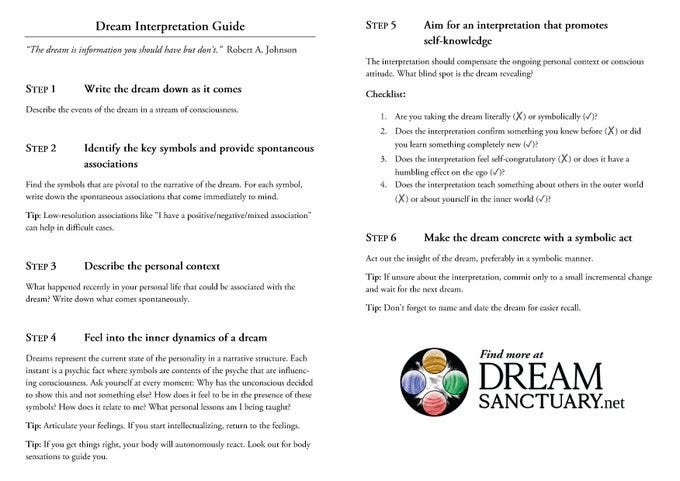
How to practice dream interpretation

Over the years, I have attempted time and time again to teach dream interpretation. Despite my best efforts, I don’t feel I have ever done justice to this topic. So let’s try once more, with a different angle.

Part 1 : The core of dream work
First, let’s start with an article that recounts how Jung came to understand dream work.
Let me quote the key lines:
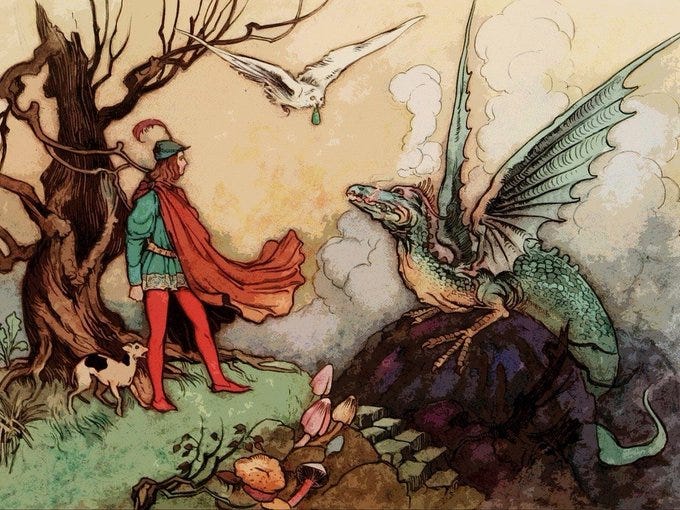
“Jung told Perry that he had finally discovered his personal dream work method after repeated, terrifying dreams of being pursued by a menacing dragon. Jung described a moment of very clear insight one day after consciously dropping down into the exact emotional memory of the uncanny quality of fear that he always experienced in the re-occurring dragon dreams.
Jung confided to Perry that he realized that the identical fear existed inside him in his waking life every time his mother in-law walked into the room!
He hadn’t been consciously aware of being deeply afraid of her.
So, the next time you have a dream where the emotion is pronounced enough to carry it into waking memory – you might consider trying Jung’s method.”
From Dreams: Still the Royal Road to the Unconscious
What is significant about this initial realisation? Three points.
First, notice that Jung’s method here is primarily emotional. At this point in his life, there was no theory of complexes or of archetypes. Instead, he engaged the dream without any intellectual framework. Therefore, the felt sense of the dream, the terror coming from the dream dragon, was the only thing that informed him.
Second, once this emotional link had been established, Jung searched over his recent memories until something clicked. The match he found was that the fear of the dragon he experienced in the dream was like the fear he experienced around his mother-in-law. With this insight, the emotion that existed only in the dream was now anchored in his personal life.
Third, Jung’s understanding of his dream was not projected outwards but understood within. He owned the emotion of the dream: the terror in the dream was his. It might have been brought on by the proximity of the mother-in-law, but he was able to recognise that the source of the emotion was coming from himself, from the interiority of his own being. By claiming responsibility for the origin of the emotion, he did not attribute it to the mother-in-law but to his own psyche.
It is worth going over the three previous points again. Without establishing them as a foundation, one will make the same mistakes that I have seen over and over again in my own practice and in others’.
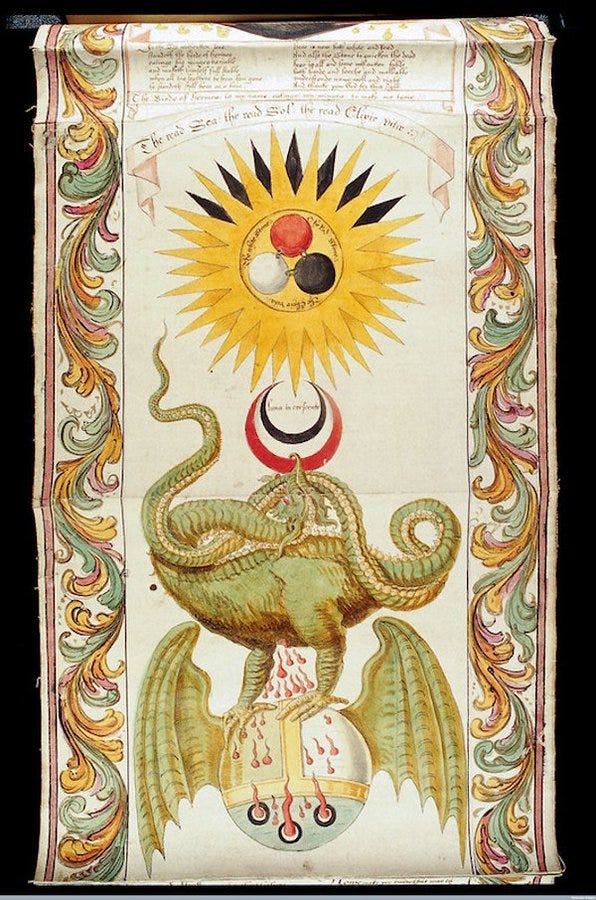
The most essential point here is that one must establish a living emotional relationship with the symbols of the dream. It is true that the symbol of the dragon is important, but it’s the emotion brought about by its presence that matters the most.
Was it friendly? Was it powerful? Was it scared? Was it curious? What was it doing? How did it feel to be next to it? Only the dream has an answer to these questions. The symbol of the dragon by itself, unrooted from any experiential context, cannot answer those questions.
This can’t be emphasised enough: the emotion must come from within the dream, not from outside. The dream cannot be evaluated by a detached conscious observer. Only the emotional context coming from within the dream can orient the interpretation. And it must be felt, not intellectualised.
“As in all practical work with psychology, mere intellect is not enough; one also needs feeling, because otherwise the exceedingly important feeling-values of the dream are neglected. Without these, dream-analysis is impossible.” (Carl Jung, Analytical Psychology and Education, The Development of Personality, CW 17, par 98)
The second point is looking for an anchor. If the emotions brought about by a dream are the lifelink to its meaning, one must also scour the personal context to look for an event where similar meaningful emotions can be found. This is not easy. It requires revisiting all the memories and moments of the previous day scene by scene until a match is found. You will know when you are on the right track when your body starts reacting. When you can feel it click in your bones, at a cellular level, then you know you are on the right track.
Third, the dream must be understood at a personal level. The dream is representing your inner psychological state. It’s about what is happening inside you. Each symbol is a part of the psyche, telling a story you are not fully aware of. Something is happening at a twilight level and is on the brink of realisation. A dream is the conscious situation of the individual as seen from the unconscious.

In my practice, these are the core of dream work: 1) a felt relationship with each dream symbol, 2) a thorough overview of the personal context, looking for a match at an emotional level, 3) an interpretation that is focused on the dreamer. All the intellectual work of elaboration comes after.
I am fully aware that these guidelines do not apply to all dreams. Some initiatory dreams have no personal context. Some dreams can only be understood through comparative mythology. And some rare dreams will not fit into any typical category, breaking every possible rule that dream work recommends. While I can acknowledge this without reservation, it is good practice to not skip over the foundations: it’s worth exhausting them before attempting something different, as the large majority of dreams can be worked on that way.
In fact, I would argue that only a strong familiarity with “typical dreams” will help you know when something unusual is happening. In the case of a really odd dream (or a parapsychological phenomenon), then the overall feeling of the dreamlike experience will make it clear to you.
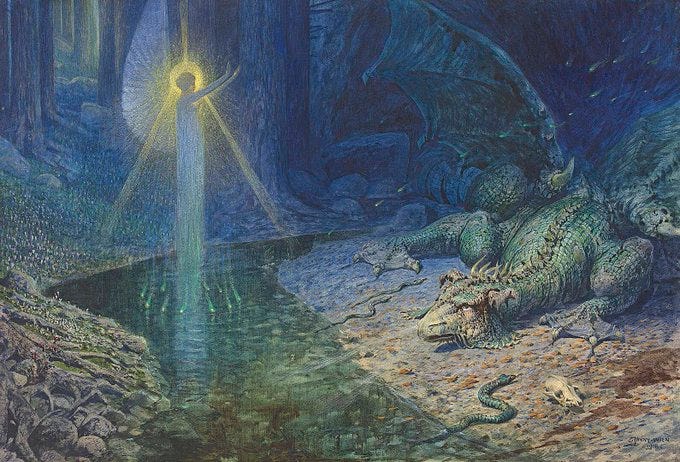
In short, next time you want to use the intellect alone to solve a dream, imagine instead that you are like Jung facing his very own first dream. One must learn to face the unconscious without any theory. Only when this is achieved can we proceed to a conscious elaboration.
James Hillman has a remarkable talk on this subject.
James Hillman - The Psyche Communicates with Images, not Information
Part 2: Spontaneous associations and amplification
Once the dream has been felt, some symbols will stand out more than others. These pivotal symbols are what hold the narrative of the dream together and thus require special attention. Ideally, all symbols in a dream should be worked on equally but, in practice, this is usually not possible unless the dream is short.
Working on a dream symbol can be done through either spontaneous associations or amplification, as long as the feeling coming from a symbol remains present.
Spontaneous associations are essentially a subjective method. One writes down anything that comes to mind when reimagining one of the symbols from the dream. This process is faster than thinking and barely conscious: words, sentences, memories, anecdotes will automatically come to mind. I write down everything I can until my mind is blank. This is something I repeat for each main symbol.
One essential point: associations must be given from within the emotional context of the dream, not outside of it.
Let me illustrate this point with an example: I once dreamt about meeting Andrew Tate. Now, if you asked for my spontaneous associations of Andrew Tate outside of the dream, they are mostly negative. But from within this dream, the feeling I got from Tate’s presence was that he was this recent convert to Islam and a faithful believer. Because of this emotional quality, all the associations I wrote down were positive.

On that note, the most common mistake in dream interpretation is, by far, confusing dream symbols with real, flesh-and-blood people.
For instance, a dream about a person (a friend, an ex, a family member) might lead one to conclude that the dream is saying something about these real-life people. This assumption is incorrect. No one goes to the dentist after losing teeth in a dream. That is because the symbol of losing teeth is distinct from the material reality of having teeth.
The confusion stems from the fact that dreams use imagos, that is, subjective or archetypal psychic contents. Imagos are aspects of the psyche, distinct from matter. They are not material or literal contents, not objects, not people.
If a dream uses the symbol of a given person, it is to communicate a meaning best represented by that person: a friend is a friendly aspect of the psyche, a lover is a loving aspect of the psyche, etc. The meaning can be discerned through associations or amplification.
As a rule of thumb, everything in a dream should be understood symbolically, unless it is one of those rare dreams that require a different approach.
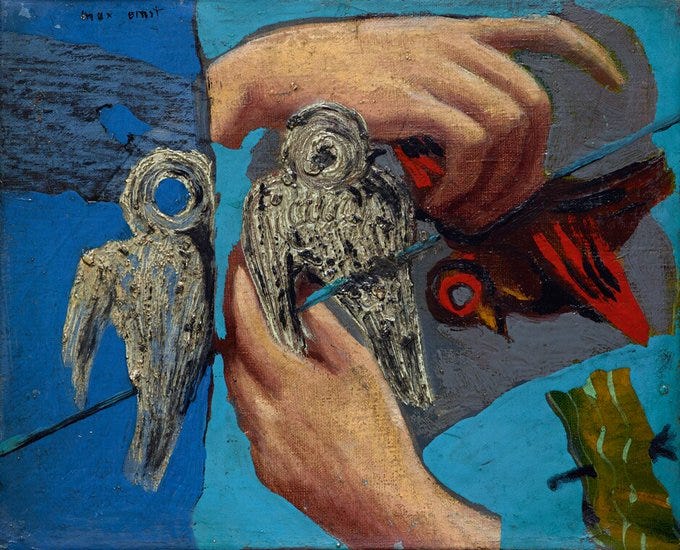
The second method is amplification. By drawing on patterns found in myths, fairy tales, or religion, one can gather similar symbols to the ones found in the dream. Different contexts will help to delineate what the symbol means. In the case of Jung’s dragon dream, many motifs of the dragon as adversary could be referred to.
For amplifications, I usually start with a search through the Collected Works of Jung (try it here: https://aras.org/concordance). Next, I prioritise depth psychologists or people who practise comparative mythology. As a last resort, I try my luck with internet articles or dream dictionaries.
Association and amplification are not opposed to each other. They are complementary. The objective reading provides a larger context for understanding, whereas the subjective reading brings a vital quality. Both enhance each other mutually.
In practice, one must alternate between methods. Sometimes the symbol is so specific or personal that it won’t be found anywhere. In this case, only spontaneous associations can do justice to the symbol. In other cases, sometimes one’s mind goes blank when asked for spontaneous associations. When the symbol is lacking personal ties, amplification will give better results.
Here is an old video of mine where I discuss a dream through associations and amplification.
Dream Series 05 – A Goose That Returns to the Feeder
Part 3: Making an interpretation
Once all the main symbols have been felt, their associations/amplifications have been made, and recent events have been matched to the emotional context of the dream, we can proceed to read the dream in its entirety.
In a usual dream, every symbol belongs to the dreamer. The dream is thus a narrative of how emotionally charged psychic contents are being experienced inside the dreamer.
If there is a fight in a dream, the dreamer is at odds with himself. If the dream is about meeting new characters, new potentials are available in the psyche of the individual. If a character dies in a dream, a certain aspect of the conscious attitude is coming to an end.
The dream is then what is happening within an individual. It is a fact about him/her. Not a material fact but a psychic fact. A self-representation of what the psyche is going through, at the level of the unconscious.
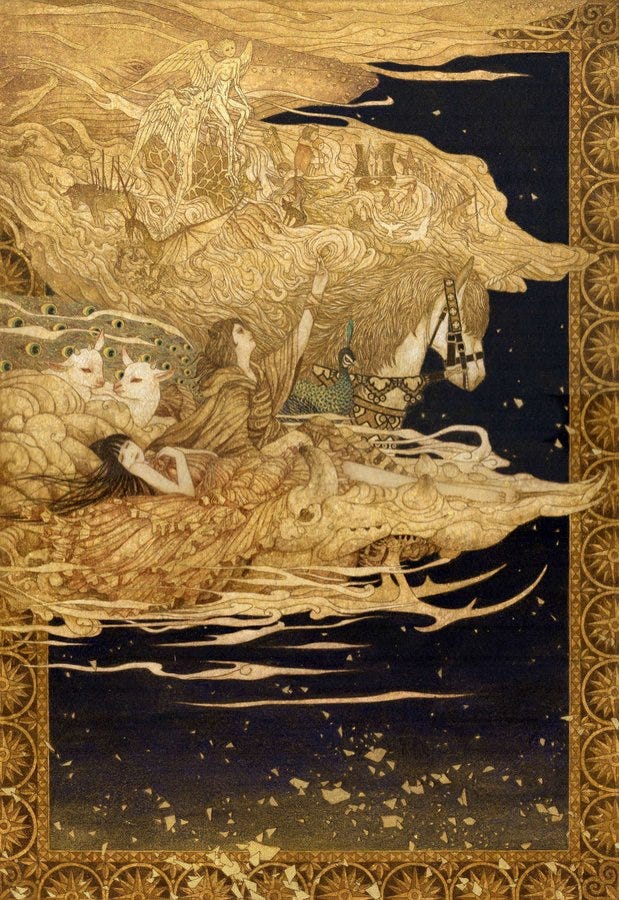
To describe what is happening, the dream breaks down the personality into manageable pieces. Characters and objects, all aspects of the dreamer, go through events of a symbolic nature and are transformed in the process. This is the narrative that must be reconstituted before making an interpretation.
“The first sentence of a dream generally gives the setting and introduces the major characters. […] Once you have that translation, you have naturally to think about how it applies to the moment of the dream and to the dreamer’s life.
After you’ve looked at the exposition in this way, you then go on to the naming of the problem.
Now the ending of a dream, the lysis, is always what the dream is driving at: a solution or a catastrophe. […] I always pay particular attention to the last sentence of the dream, which gives the unconscious solution if there is one.” (Fraser Boa and Marie-Louise von Franz, The Way of the Dream, page 34, emphasis mine)
Looking at the dream from beginning to end, pay special attention to 1) How does it start? What is the initial setting and characters of the dream? 2) What transformations are taking place? How do they follow each other? 3) How does it end? Is there any resolution?
This symbolic story is the psychological description of what is happening to the conscious attitude. It is factual insofar as it is a genuine product of the unconscious: it has emerged without any conscious influence from the dreamer. (Note that lucid dreams require a more cautious reading.)
The story of the dream can be remarkably different from recent events: a nightmare can follow a good day, and a comforting dream can follow a difficult day.
This is because the unconscious operates through compensation.
A dream always brings something new, something that was not fully known to consciousness. But it also brings a compensation of the conscious attitude. If one was too prideful, the dream will be humbling. If one was lacking too much self-assurance, the dream will bring some comfort.
In general, the unconscious is concerned with the balance of the general attitude. A dream will not reinforce a conscious position that is too pronounced. Rather, it will bring an unconscious complement to restore an equilibrium.
Dreams do not self-aggrandise, nor do they humiliate. They express things as they are. It’s the perspective from which they view things that we are not used to. The unconscious relativises what appears essential to the ego and magnifies what is misjudged as having no value whatsoever.
At this point of dream work, the compensating narrative of the dream should have been matched to a recent event or memory. In this ideal case, the transformation of the conscious attitude is easier to follow.
Maybe the dream is revisiting something that has already happened, allowing one to self-reflect on how the events were lived at the unconscious level. Or maybe it is an anticipation of something to come. Some dreams can only be understood the next day.
If no context can be found, something that happens quite frequently, then one is left guessing at what the psyche is bringing to attention. Initiatory dreams belong in this category. The so-called “big dreams” usually do as well.
To repeat, the process of matching the emotional tone coming from the dream to an event is not done through the intellect. It must be felt in the body. Being aware of one’s bodily reactions is a great help in this part.

Whether the dream has been anchored in real events or not, we can now finalise our interpretation with all the previous elements.
The interpretation should be about something new, a self-knowledge that concerns only the personality of the dreamer, which aims at compensating his conscious situation.
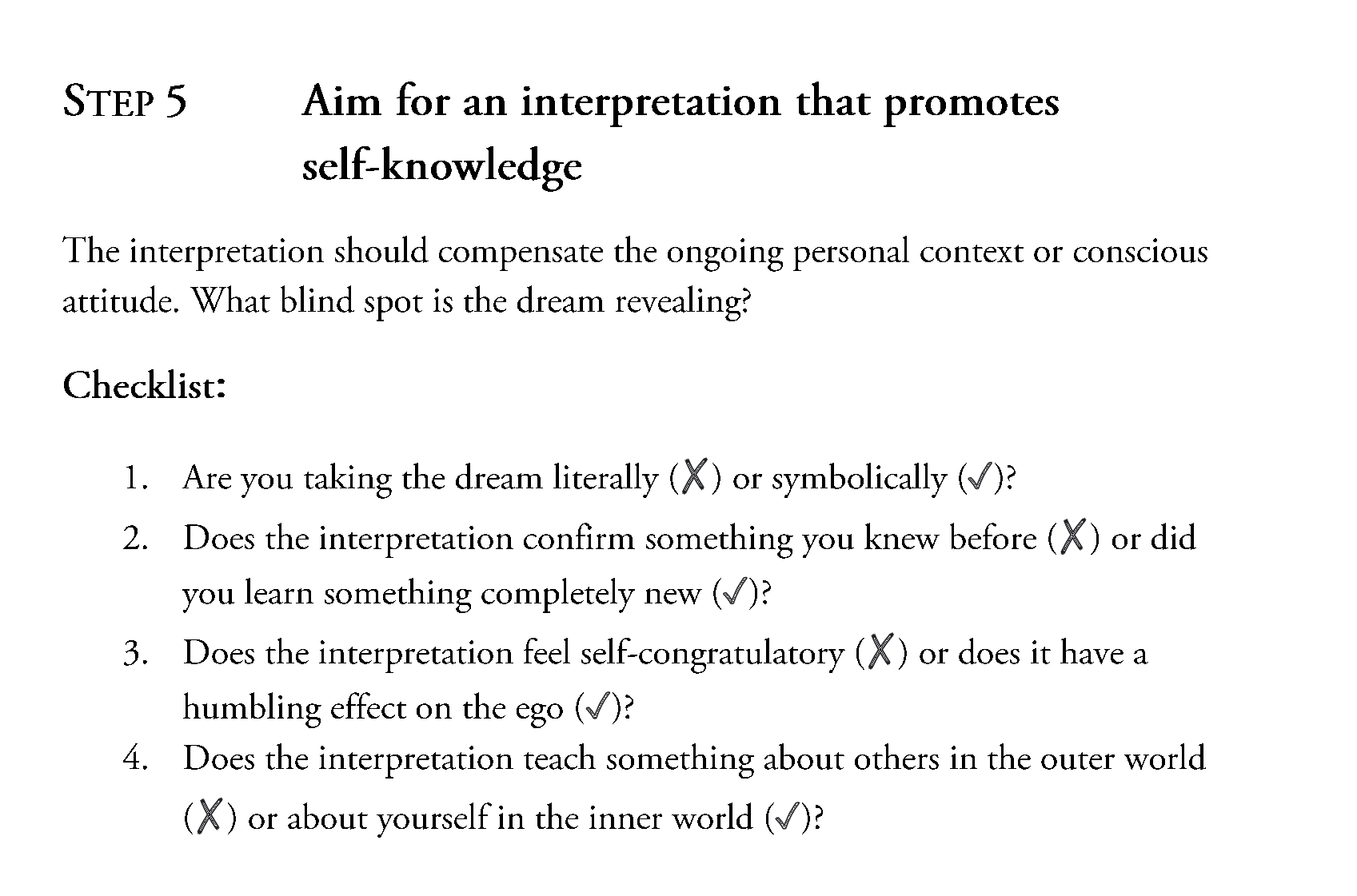
But having an interpretation is no guarantee that it is correct. It is easy to make mistakes in the process. To avoid the most common ones, I have made a checklist that applies to most dreams.
The first mistake is taking the dream (or parts of it) literally. Symbols are psychic contents, not concrete realities.
Second, the interpretation should be something new and fresh. If the interpretation reaffirms something that is consciously known, discard it.
Third, the interpretation should not be self-aggrandising. Insights coming from dreams are humbling to the ego.
Finally, the dream should not be understood at a social level. Rather, one must focus on what is happening to the personality.
This checklist is from my template for dream interpretation.
Getting the right interpretation is a major achievement. When the structure of the dream is finally revealed, my entire body can feel it. It is not intellectually stimulating but a realisation that the unconscious is seeing all my blind spots at once. I feel naked and vulnerable, as if I have been stripped of all the lies I use to avoid facing myself. And yet I feel stronger, more certain of who I am. It is never my ego that has been harmed but its unearned grandiosity, that feeling of self-righteous contentment I get when I can get away with something I should have been called out on.
In other cases, dream work only goes so far. One must accept an incomplete reading. A low-resolution understanding is usually enough to get started. Getting a sense of the direction of the dream, how the personality is becoming, is already valuable: a nightmare can be seen as a “no”, a good dream as a “yes”.
If nothing is certain, the last option is to wait for the next set of dreams. Incubation, or going to sleep with an open-ended question in mind, can also help the process in some cases.

Part 4: Adding a moral dimension
Adding a moral dimension to a dream interpretation is an advanced concern in dream analysis. It is much more important to focus on foundational skills, such as how dreams feel and how they relate to one’s life. Only when these capabilities have been acquired can the interpreter work towards a moral reading.
What is a moral reading? Let’s take a simplified dream to make a point: I am on a beach and I see a person drowning in the distance, calling for help.
What’s the interpretation of such a dream? Taken at face value, it would be something like an aspect of the personality is overwhelmed and risking dissolution.
While correct, this interpretation is missing a moral dimension: this dream character needs help and must be rescued! The interpretation then should be more along the lines of finding which aspect of the personality is struggling and offering appropriate help by reducing the complexity of recent events.

Here is another dream to make a similar point:
I am at a buffet and I serve myself too much food. I have a low appetite but still have the equivalent of two-three meals. My plate is full of fish, maybe salmon.
I had this dream while reading Jung’s Aion. That book has a long discussion on the fish as a symbol. With this context, we can see that the ego has too much food on its plate.
Eating food in dreams is something like consuming information, just like people devour books or binge-watch TV series. Here, the buffet is the content of the book that is being read.
Given that the ego has a low appetite, it can be read that it will not be able to enjoy the food, to handle what is contained in the book. Thus, a moral interpretation must take into account the lack of appetite. My final interpretation was that I should pause the reading of the book until my appetite came back, until I felt it was time to go back to it.
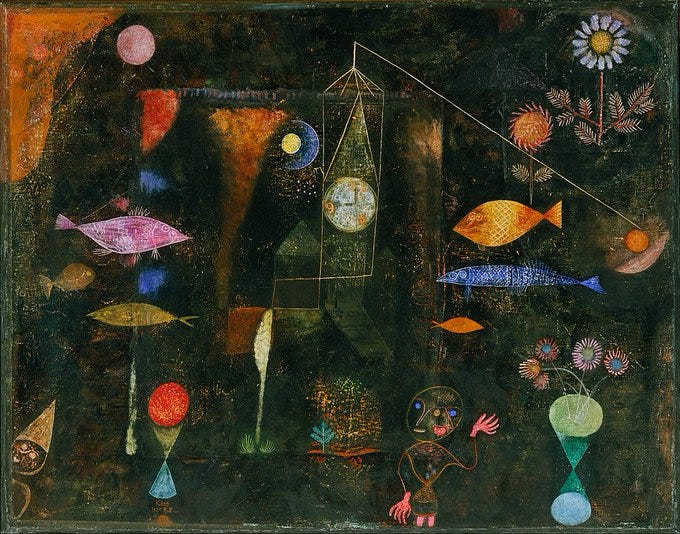
Here is a third dream: I am fighting a skilled enemy archer. Because he is out of my reach, I send an assassin to kill him.
The day before, I was reading some quotes online, and I took them personally. I went to bed convinced that they were written by someone who has not fully lived what they are talking about.
In this way, the archer is the personification of the hurt that the quotes were causing me. And the assassin is the rationalisation I came up with, something that would put an end to the hurt caused by the quote-archer.
The interpretation is now straightforward: there is a conflict in the personality and it is fighting itself. If we add a moral dimension to this reading, we need to look at why the personality is not at peace. We can thus ask, “Is there a way to restore the peace?”
To do so would require first to stop the assassin, which means to depotentiate the rationalisation, and second to rehabilitate the humanness of the archer. The hurt from the quotes, though real and painful, should be a source of introspection and not used to further the conflict by sending an assassin.
In this manner, many dreams cannot be taken at face value. Too often, there is an ongoing conflict in the psychic landscape that cannot resolve itself, going from one extreme to the other.
If some dreams are clear on the fact that nothing can be done to help, the majority of them will give an intuition that the tension can be lessened or at least reframed.
It is thus advisable to work backwards through a dream. Starting with the last symbol, we can rewind the dream symbol by symbol until we find the root cause of the problem, the first node from which all tensions originate. The hope is that the conflict can be mitigated if we find its origin.
And yet I must warn that interpreting a dream morally can be extremely harsh on the ego. If it is hard enough to take the dreamer through a dream interpretation, I have found that it is almost always too much to ask the dreamer to look at their dreams along a moral dimension. Friendships can be lost that way. Thus, a moral reading should only be done with the full cooperation of a mature ego.
Part 5: Take a leap of faith
Are we done yet? Almost. One last step is needed.
Once we have the right interpretation, we need to make the insight concrete. This requires acting in a way that pays respect to the insight of the dream.
For instance, in the buffet dream, I did in fact pause my reading of Aion. And in the archer dream, I dismissed the rationalisation and journaled through my hurt.
If these examples seem trivial, other dreams made me change course through life: there was a time in my life where I wanted to become a Jungian analyst. One night, I went to bed with that idea resolutely in mind. I woke up with a foreboding nightmare. I saw a menacing feminine presence at the door of my bedroom, ready to intervene if needed. Seeing the unconscious respond this threateningly to that idea, I discarded it and renounced that path.

Optional: the last point to consider is that you can act in a symbolic manner. Once you know how to reply to a dream, why not respond using dream language?
This requires a great deal of familiarity with how the unconscious works, and thus it is not for beginners. In my own practice, the few dreams that I have responded to symbolically have had a more potent effect than others.
For instance, I’ve had a dream where I was visited by a tiger. It seemed curious about me.
The next morning, I started to see tigers everywhere. Because of this increase of synchronicity, I took the dream seriously. Given that I had no association with the tiger, I read about it and found that it was a lunar or “yin” animal. Decided to befriend this feminine aspect, I grabbed a statue of a tiger I had in my house and offered it some food. After this ritual, synchronicity stopped and a new theme unravelled over the next days.

To conclude, dreams need the entirety of the individual to be worked on. Understanding a dream at the intellectual level is far from enough. It must be accompanied by the ability to feel, as well as taking clues from the body. And yet, nothing will happen if no courageous action is taken on behalf of the dream.
“Why is every psychological development, every forward step of consciousness, always conditioned by an ethical decision that has to be made on the razor’s edge?” (Marie-Louise von Franz, Psychotherapy)
A leap of faith is the only way to truly test an interpretation. Depending on how accurate the interpretation is, you’ll see reality conspiring for or against you.
In other words, a bad interpretation leads to an unliveable reality, and a good interpretation leads to a liveable one.
There is no shortcut in dealing with one’s unique mystery.
Sources and links
Thanks to anyone who read this thread in its entirety. I appreciate you making the effort to understand what I wrote. I hope you got something out of it.
In all honesty, there is nothing easy about dream interpretation. It is as difficult to teach as it is to practise. My hope is that this thread has explained enough to make dream analysis intriguing and worth pursuing.
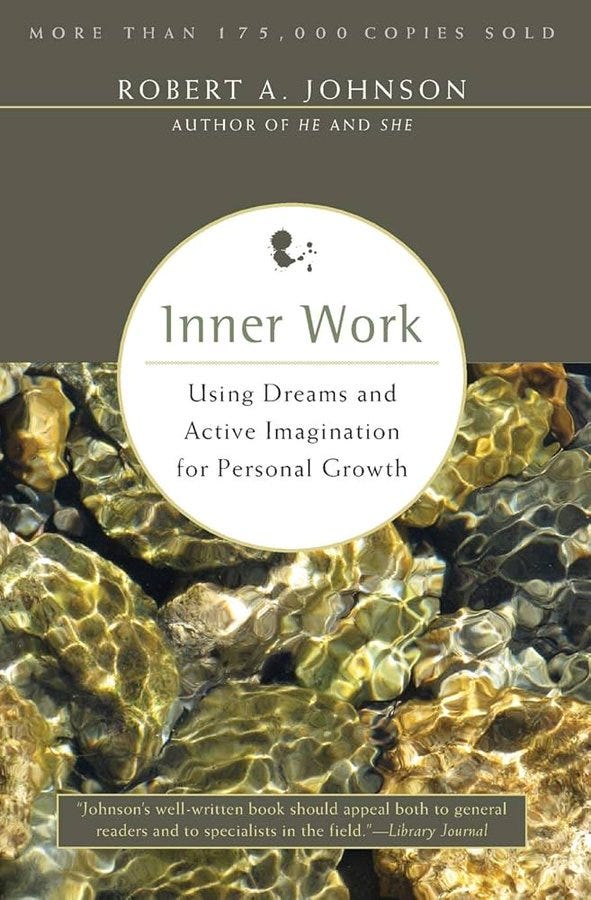
If you want an alternative to the method I’ve outlined above, I wholeheartedly recommend Robert Johnson’s Inner Work: Using Dreams and Active Imagination for Personal Growth. It is the most approachable and concise overview of dream interpretation.
His method has been very influential on me, and yet I did feel a need to make something of my own, something that emphasises some steps differently.
You can find a summary of the first half of the book here.
Finally, if you want to know more about how I do dream interpretation, you can check:
1) My most complete article on dream interpretation.
https://dreamsanctuary.net/template/
2) My dream series on YouTube, where I explain some of my dreams.
https://youtube.com/playlist?list=PLAURDEnBVPHDVAl1hIY9ubdOtSCIiWqyM
3) My other dream series, Dream Dialogue, where I present a friend’s dreams.
https://youtube.com/playlist?list=PLAURDEnBVPHCE1MxQhxWYPAsVcXs2mOVt
4) At the time of writing, only one dream interpretation is available under the name of Dionysophy, my newest project.
https://dionysophy.earth/podcasts/living-symbols/episodes/2148942514